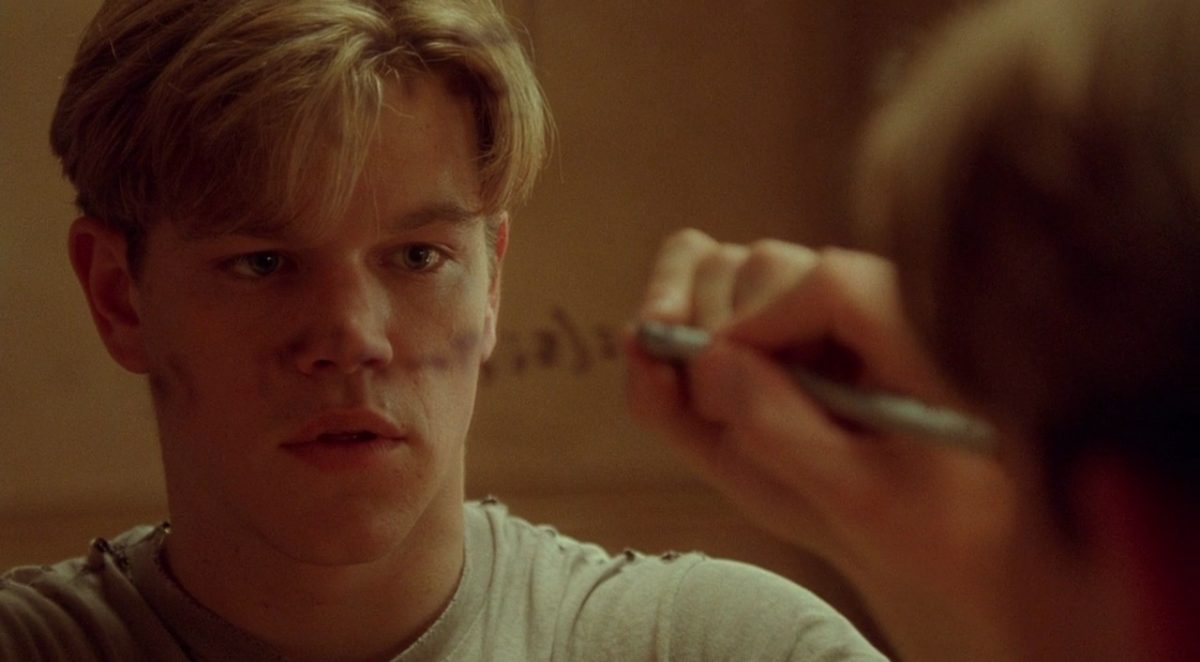
Screenplay Breakdown: Good Will Hunting (1997)
Why the Good Will Hunting Screenplay Hits: Craft, Character and the Story Behind the Story
When Good Will Hunting landed in cinemas in 1997, it felt like one of those rare stories that arrives already woven into the cultural bloodstream. Viewers talked about it as if it had always been there, sitting quietly in the background, waiting for the rest of us to catch up. Two earnest young actors wrote a script, somehow convinced Hollywood to take a risk, and walked away with an Academy Award (see below).
It sounds clean, tidy and almost suspiciously uncomplicated. Anyone who has ever fought with a blank page knows otherwise. The screenplay carries the marks of years spent drafting, overthinking, losing confidence, finding confidence, rewriting and throwing away entire versions of the story. That messy history is part of what makes the final version so remarkably focused.
For writers, both seasoned and emerging, this screenplay is more than a beloved piece of film history. It stands as a surprisingly practical guide to making honest work. It is a reminder that character will always outlast spectacle, that structure can be elegant without being showy, and that emotional truth matters more than clever mechanics.
With this breakdown, I’m intending to unpack why the screenplay works on such a deep level, as well as how its behind-the-scenes evolution shaped the version we know today. This article also draws out some concrete lessons for anyone shaping their own screenplay or novel. The aim is not to simply admire the film, but to deconstruct its craft into elements that you can apply to enhance your own work.
The Writing Origins That Shaped the Story
Long before people were quoting Sean Maguire on park benches or crying into their cinema choc tops, Good Will Hunting was a very different story. Matt Damon and Ben Affleck began writing it in their early twenties, confident enough to attempt a feature screenplay but still young enough to lean into the big, flashy ideas that feel essential at that age. The earliest drafts were less an emotional character study and more covert thriller. Hidden government agencies, clandestine operations, a prodigy entangled in intelligence work. It had all the ingredients of a different kind of blockbuster. It sounded interesting, but not like a Gus Van Sant film, and not like something that would stand out against other noisy action thrillers of the era.
That said, this early shaping of the script isn’t to be mocked or dismissed; it’s something seminal that most writers recognise. When you start a project, especially your first big one, you reach for genre scaffolding because it feels safe. It gives the story instant momentum. It also makes you believe that the industry might actually read the thing. Damon and Affleck had a compelling character growing in the centre of the story, but the surrounding plot was louder than he was.
The breakthrough came when Rob Reiner read the script and told them the spy material was getting in the way of the real story. He saw that the emotional core was already humming in the scenes between Will and Sean, and he pushed them to trust that quieter, richer direction. Not long after, the legendary screenwriter William Goldman offered the same advice with a bluntness only he could pull off. Suddenly, the script had permission to be vulnerable.
There is a lesson in that moment. Writers often cling to the first exciting concept because it feels like the anchor that keeps the project afloat. The truth is usually the opposite. Sometimes the boldest thing you can do is strip away the noise and trust the heartbeat that was there from the beginning.
Character as the Engine of the Story
The screenplay works because it refuses to treat character as decoration. Will Hunting is not a stereotypical genius, nor is he a hollow container for plot. He is complicated and angry and sharp and frightened. He is shaped by a traumatic childhood that left him distrustful of others and unsure of his own worth. His mathematical gifts are both a blessing and a burden, and the script never turns them into a superpower that magically fixes his life.
The choice to place Will in two contrasting environments provides constant friction. At MIT, he embarrasses academics without breaking a sweat. Back in south Boston he blends into the background, surrounded by friends who love him but who do not have the tools to push him. This split in his identity creates tension even when nothing dramatic is happening on the surface. It also means the story never needs an external villain. The goal is not to defeat an enemy. The goal is to overcome an internal belief that he is undeserving of change.
Sean Maguire is written as the perfect counterpart. He is bruised by life but not broken. He is educated yet grounded, patient but unwilling to tolerate nonsense. Will tries every trick to push him away, and Sean refuses to move. Their conflict never feels engineered because their emotional wounds align in a strangely complementary way. They argue not because the script says they must, but because two men carrying that much grief cannot help colliding.
This dynamic is one writers can borrow. Strong character relationships are not built on opposites. They are built on shared desires and clashing fears. When you create two characters who want the same thing but fear it for different reasons, every conversation becomes charged with meaning.
Dialogue That Sounds Real Because It Is Real
People often remember the film’s monologues, but its quieter exchanges matter just as much. The dialogue works because it reflects the emotional strategies of the characters who speak it. Will fires off jokes and intellectual jabs because humour is his armour. Sean speaks with deliberate gentleness because he knows he is sitting across from someone who will bolt at the first hint of vulnerability. Chuckie speaks with blunt loyalty because he has no interest in pretending.
None of it feels clever for the sake of it. The lines land because they grow naturally from personality and circumstance. Damon and Affleck also wrote from cultural familiarity. They knew the shape and sound of Boston speech. They understood how working class conversations move, how teasing functions as affection, and how silence often covers what people cannot bring themselves to say aloud.
For writers, this is a practical reminder to build dialogue from psychology rather than wit. Ask what your character wants the other person to think. Ask what they are trying to hide. Ask what they believe they must protect at all costs. When those questions fuel the dialogue, the words do not just sound natural. They reveal lived experience.
Structure That Keeps the Story Honest
The structure of Good Will Hunting looks simple at first glance, but that simplicity is the result of careful design. The narrative follows Will from exposure to resistance to connection to confrontation to transformation. It is a familiar arc, yet it never feels formulaic because the emotional progression is grounded in small, cumulative steps rather than sudden breakthroughs.
Nothing is rushed. Every time Will makes progress, he immediately pulls back. That regression is not a plot trick. It is a believable reaction from someone who has been hurt repeatedly and who does not yet trust the idea of his own future. When the famous “It is not your fault” scene finally arrives, it hits with such force because the groundwork has been laid across every preceding interaction. Sean, played with such heart by Robin Williams, does not leap to that moment. He earns it.
The secondary plots are also designed with purpose. Skylar tests Will’s fear of intimacy. Lambeau tests his fear of authority and success. Chuckie embodies the pull of loyalty and comfort. Every thread pushes Will toward the same internal question: What might happen if he stopped running?
Writers can draw something clear from this. Build your structure around variations of the same theme. Let every subplot press on the same emotional bruise, but in a different way. A coherent structure is not one with neat symmetry; it is one where every corner of the story points toward the same truth.
Emotional Authenticity Without Melodrama
The screenplay handles emotion with a kind of steady, unflinching honesty that is rare. The film does not shy away from trauma, grief or loneliness, but it refuses to exploit them. Nobody gives speeches that sound like they were written for awards season. Nobody screams in slow motion. Even the therapy sessions unfold with more tension than theatrics. And we do know that some of the more evocative exchanges emerged through ad-lib, which wouldn’t have been possible if not for the skill of the performers and the naturalness of the writing that sets up these moments.
Sean shares his own flaws and mistakes, allowing the relationship to become reciprocal instead of clinical. Will listens even when he pretends not to. Their conversations move in circles until they stop feeling like scripted scenes and start feeling like two people slowly teaching each other how to breathe again.
This restraint gives the emotional moments power. The script trusts silence. It trusts stillness. It trusts the audience to notice what is happening without having everything spelled out.
For writers, the approach is straightforward: let emotion rise, but do not force it. Let characters resist their own turning points. Let them contradict themselves. Let them feel something and then immediately shut it down. Those small hesitations are where authenticity lives.
The Power of a Clean, Payoff-Driven Ending
The ending works because it balances satisfaction with uncertainty. Will chooses change, but the film does not promise that change will be easy. He reads Sean’s note, gets in the car and drives toward a possibility. That is enough. The story does not need to show what happens next.
The callback to Sean’s line regarding “seeing about a girl” gives the ending emotional unity – and provides space for a comical beat. It shows that Will has absorbed the wisdom Sean spent the film offering. He is finally acting on something larger than fear.
For writers, this ending demonstrates the value of solving the emotional question rather than tying up every loose thread. If the character completes their emotional arc, the story feels whole even with open space at the edges.
Craft Lessons You Can Apply to Your Own Work
The lessons here are not abstract. They are directly applicable to both screenwriting and prose.
- A story needs a clear emotional core. If the central question is blurry, the plot loses force. Damon and Affleck only found their story when they removed the noise surrounding it.
- Relationships drive character growth. A protagonist needs other characters who challenge them in ways they cannot ignore.
- Dialogue should express emotional strategy. When characters speak from honest psychology, the audience believes them.
- Structure should tighten around theme. The more angles you use to examine the same emotional problem, the richer the story becomes.
- Restraint can be more powerful than spectacle. Emotional truth stays with audiences far longer than dramatic noise.
The Story Behind the Oscar Win
Even after finding its footing as a more grounded drama, the screenplay still had to navigate industry pressure. Studios were not entirely convinced that a quiet film about trauma, working class identity and emotional growth could succeed commercially. Kevin Smith championed the script. Harvey Weinstein – now a figure of much derision, but at the time a powerful influence within the industry – bought it for Miramax. Producing the film required persistence and more than a few uncomfortable compromises.
Robin Williams was the final key. He saw the emotional honesty in the writing and understood what he could bring to it. His performance changed the film’s gravity. When an actor of that magnitude chooses a script, it tends to shift the conversation from risk to opportunity.
For writers, this is a hopeful reminder that authenticity attracts collaborators. You do not have to write for every possible audience. You just have to write something that feels true enough for someone else to recognise its value.
Why the Screenplay Still Resonates Today
Decades later, the film still connects not only because of the powerful performances at its core, but because its themes remain universal. Will’s fear of being seen, of being loved, of being enough, feels painfully human. His story is not really about mathematics or therapy or genius. It is about the terrifying act of stepping into a life you believe you do not deserve.
People respond to that because it mirrors something familiar. It is easy to recognise your younger self in Will, no matter where you grew up or what you studied. The screenplay gives that recognition space to breathe without judgement.
What You Can Take Forward
The power of Good Will Hunting lies in its courage to be honest without being sentimental. It shows that modest stories can hit just as hard as grand ones when the characters are written with sincerity. For anyone wrestling with a screenplay or novel, it offers a challenge worth accepting. Look at your story and imagine what happens if you strip away the loudest pieces. If the emotional truth remains intact, then you have something worth building on.
Writing that lasts is writing that understands people. Damon and Affleck found that understanding in the middle of many drafts and many mistakes. Their screenplay endures because it was built on humanity rather than gimmick. Your own work can carry that same spark if you trust the quiet truth at its centre and let it grow.
Interested in Reading the Pre-Production Screenplay?
Below, you’ll find a copy of the screenplay that Ben Affleck and Matt Damon prepared before shooting began. As you’ll note, the film deviates from this in some respects, but the essence is clear:
Good Will Hunting Screenplay PDF from SellingYourScreenplay.com



-0 Comment-